ID-225/200 – Oil Thickness sensor
Applications
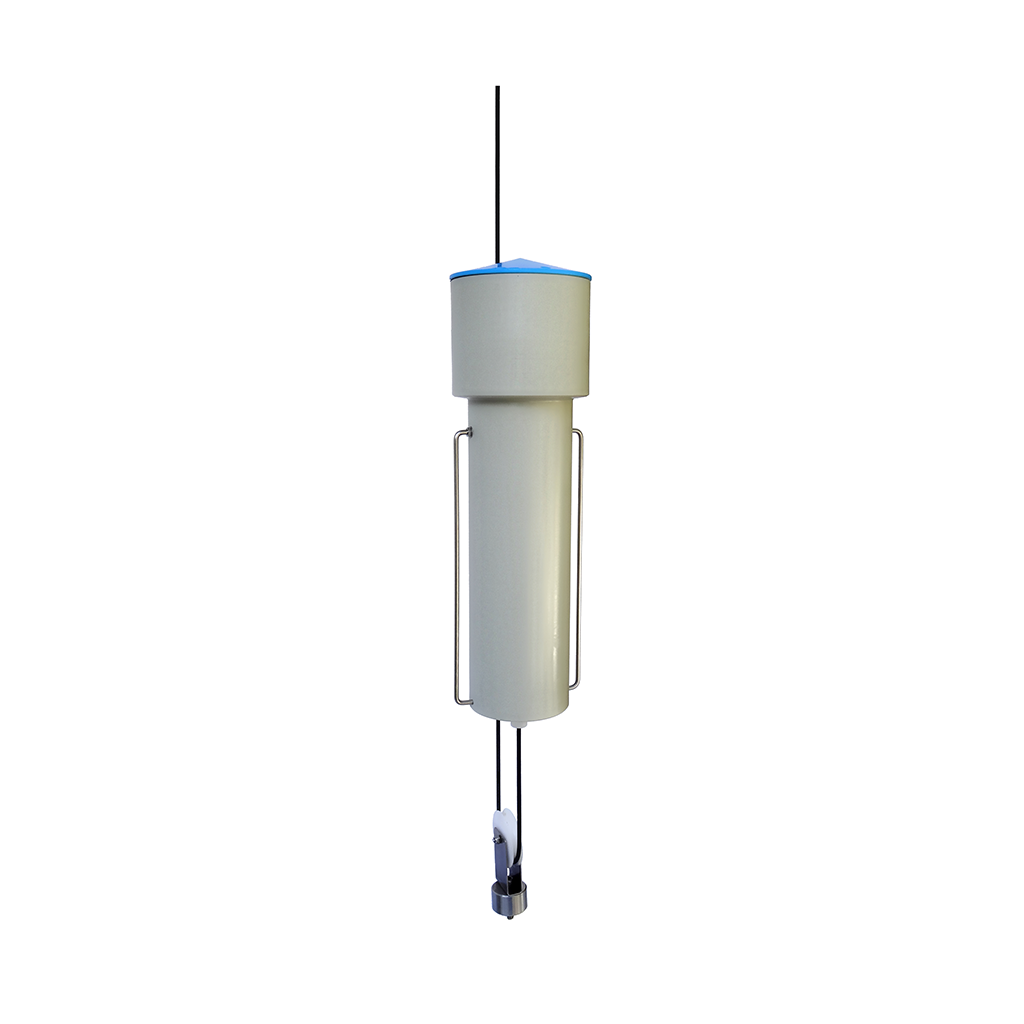
The LEAKWISE ID-225/200 sensor is designed for continuous measurement of varying hydrocarbon layers on water surfaces, specifically targeting locations where oil leaks accumulate and are cleaned. This advanced sensor provides real-time trends of oil layer thickness, making it invaluable for petroleum and power companies in monitoring and controlling accumulated thick oil layers.
Key applications include:
- Remediation Control: The sensor enables on-line monitoring of oil thickness changes in groundwater wells over time, facilitating effective oil cleanup through automated remediation control.
- Skim Tanks: In processes where skim tanks collect oil-containing wastewater, the ID-225/200 can be inserted through an inspection hatch, allowing for automatic control of oil skimming operations.
- Oil/Water Separator Monitoring: To meet environmental regulations, the ID-225/200 monitors oil layer buildup in separators without human intervention. When installed upstream, it indicates when the separator’s oil separation capability is nearing its maximum, signaling the need for thick oil layer pumping.
- Wastewater Sewer Monitoring: Installed near process areas, the ID-225/200 detects and helps control significant oil leaks at the source, reducing treatment plant load and providing immediate alarms for large spills.
ID-225/200 Description
A LEAKWISE system comprises a controller and one or more sensors. The ID-225/200 sensor features a high-frequency transmitter mounted on a float that maintains its position precisely at the liquid/air interface, despite fluctuations in liquid level up to 45 m (150 ft.), with a minimum water level requirement of 33 cm (13 in). The oil layer measurement is linear at the sensor level, providing reliable and repeatable readings across its range.
The ID-225/200 operates in conjunction with the analog PS-220 Controller, which offers two field-adjustable alarm points:
- Low oil alarm – Triggers upon reaching a first predefined hydrocarbon layer thickness
- High oil alarm – Activates when the hydrocarbon layer reaches a second predefined thickness
The ID-225/200 is designed to measure oil layers from 1 to 200 mm (0.04 to 8.0 in) thick, offering reliable and repeatable in tracking of oil accumulation. It continuously monitors changes in oil layer thickness, transmitting this online data via a 4-20 mA output signal from the controller. The system utilizes controller relays for both local and remote alarm and control functions.
Built-in diagnostics continuously monitor sensor operation, ensuring reliable performance. For more complex installations, the SLC-220 digital controller can manage up to four sensors simultaneously. To optimize performance, a stilling well is recommended for all ID-225/200 installations and is available as an optional accessory.
The ID-225/200 is specifically designed for environments where reliable measurement of thick oil layers is crucial, making it ideal for applications in remediation control, skim tanks, oil/water separators, and wastewater monitoring systems.
Principle of Operation
LEAKWISE ID-225/200 sensors employ advanced high-frequency Electromagnetic Absorption technique. Each floating sensor contains high-frequency electromagnetic energy transmitting and receiving antennas that provide continuous monitoring of the liquid volume around the sensor. This technology exploits the principle that water absorbs more electromagnetic energy than hydrocarbons. Consequently, changes in the water’s absorption rate at the top layer indicate the accumulation of hydrocarbons. LEAKWISE ID-225/200 sensors are engineered to monitor the buildup of both separated and emulsified non-soluble hydrocarbons on water and other aqueous solutions.
A unique feature of these sensors is their ability to differentiate between wet and dry sump conditions, a capability unmatched by other oil monitoring systems, allowing the indication of water level below the minimum required.
Download PDFID-225/200 Sensor Specifications:
The ID-225/200 Oil Thickness Sensor is a floating device designed for reliable measurement of hydrocarbon layers on water surfaces.
It offers:
- Oil layer monitoring range: 1 – 200 mm (0.04 – 8.0 in)
- Resolution: 1 mm (0.04 in)
- Water level variation range: 30 cm up to 45 m
- Operating temperature: 0 – 70°C for water, -10 – 80°C for air
- Intrinsically safe design for hazardous areas
- Integral cable length of 10 m, extendable up to 50 m
- Compatibility with PS-220 analog controller and SLC-220 digital controllers
- 4-20 mA output for oil thickness monitoring
With a compact design (87 mm diameter, 384 mm height) and durable construction, the ID-225/200 is ideal for long-term monitoring in various industrial applications requiring reliable measurement of thicker oil layers.
Operating Range:
Physical Specifications
Accessories
Stilling well in 1 m and 2 m long sections, which can be assembled to any required length.
Sensor and PS-220 Controller Certifications
ID-225 Sensor : ATEX Intrinsically Safe: II1G Ex ia IIC T4 Ga -40 °C to +70 °C. Also: IECEx, UKEX and cETLus
PS-220 Enclosure For hazardous areas:
- North America – NEMA 7, Class I, Div 1, Groups B, C & D; NEMA 4
- Europe ATEX & IECEx – II2(1)GD, Ex db [ia Ga] IIC T6 Gb IP66
PS-220 Controller:
OPTIONS:
Enclosure Options:
- /N4 for NEMA 4X (IP65): 305 x 195 x 120 mm (12.0 x 7.7 x 4.7 in) 2 Kg (4.4 lb.);
- /N7 for NEMA 7: 278 x 259 x 166 mm (11.0 x 10.2 x 6.5 in) 8.5 Kg (18.7 lb.);
- /Exd for Ex d: 268 x 268 x 210 mm (10.6 x 10.6 x 8.3 in), 11.2 Kg (24.7 lb.);
- /BP: without an enclosure, to be mounted in a local cabinet. 190 x 180 x 130 mm, 1 Kg.
Other Controllers – Refer to separate data sheets
SLC-220: Digital Signal Processor for up to four ID-220 Series sensors support, with various output options, including relays, lights, 4-20 mA, LCD, Modbus communication in RS-232 and RS-485, and remote cellular connectivity.
Sensor models at a glance
Seven LEAKWISE ID-220 series sensors. Not sure which one fits? Use the Sensor Selection Tool →
| Model | What it measures | Oil layer range | Water level change | Typical use | Details |
|---|---|---|---|---|---|
| ID-221 | Oil sheen: detection + layer-thickness trend | 0.3 – 25 mm | 30 cm up to 45 m | Wet sumps, tanks, monitoring wells, oil/water separators, very deep sumps, sewers | Data sheet (PDF) |
| ID-223/500 | Oil sheen: detection + layer-thickness trend | 0.3 – 20 mm | 40 – 500 mm | Sumps (wet or dry), canals, retention ponds with small level changes | Data sheet (PDF) |
| ID-223/2000 | Oil sheen: detection + layer-thickness trend | 0.3 – 20 mm | 70 – 2,000 mm (up to 5,000 mm on request) | Sumps (wet or dry), canals, retention ponds with large level changes | Data sheet (PDF) |
| ID-223/2500 | Oil sheen: detection + layer-thickness trend | 0.3 – 20 mm | 70 – 2,500 mm (up to 4,000 or 5,500 mm on request) | Large level changes in small-area sumps, including dry sumps | Data sheet (PDF) |
| ID-225/100 | Oil layer thickness (linear measurement) | 1 – 100 mm | 30 cm up to 45 m | Remediation control, skim tanks, oil/water separators, wastewater | Data sheet (PDF) |
| ID-225/200 | Oil layer thickness (linear measurement) | 1 – 200 mm | 33 cm up to 45 m | Remediation control, skim tanks, oil/water separators, wastewater | Data sheet (PDF) |
| ID-223ET | Ethanol concentration in water (also methanol) | n/a – ethanol 10 – 100 % by volume | Up to 500 / 2,000 / 2,500 mm by sub-model (up to 5,000 / 5,500 mm on request) | Ethanol storage tanks, separators and treatment plants, stormwater and wastewater at ethanol sites | Data sheet (PDF) |
Water level change = the range over which the floating sensor follows the surface. Minimum sump or well diameters differ by model – see the Sensor Selection Tool.